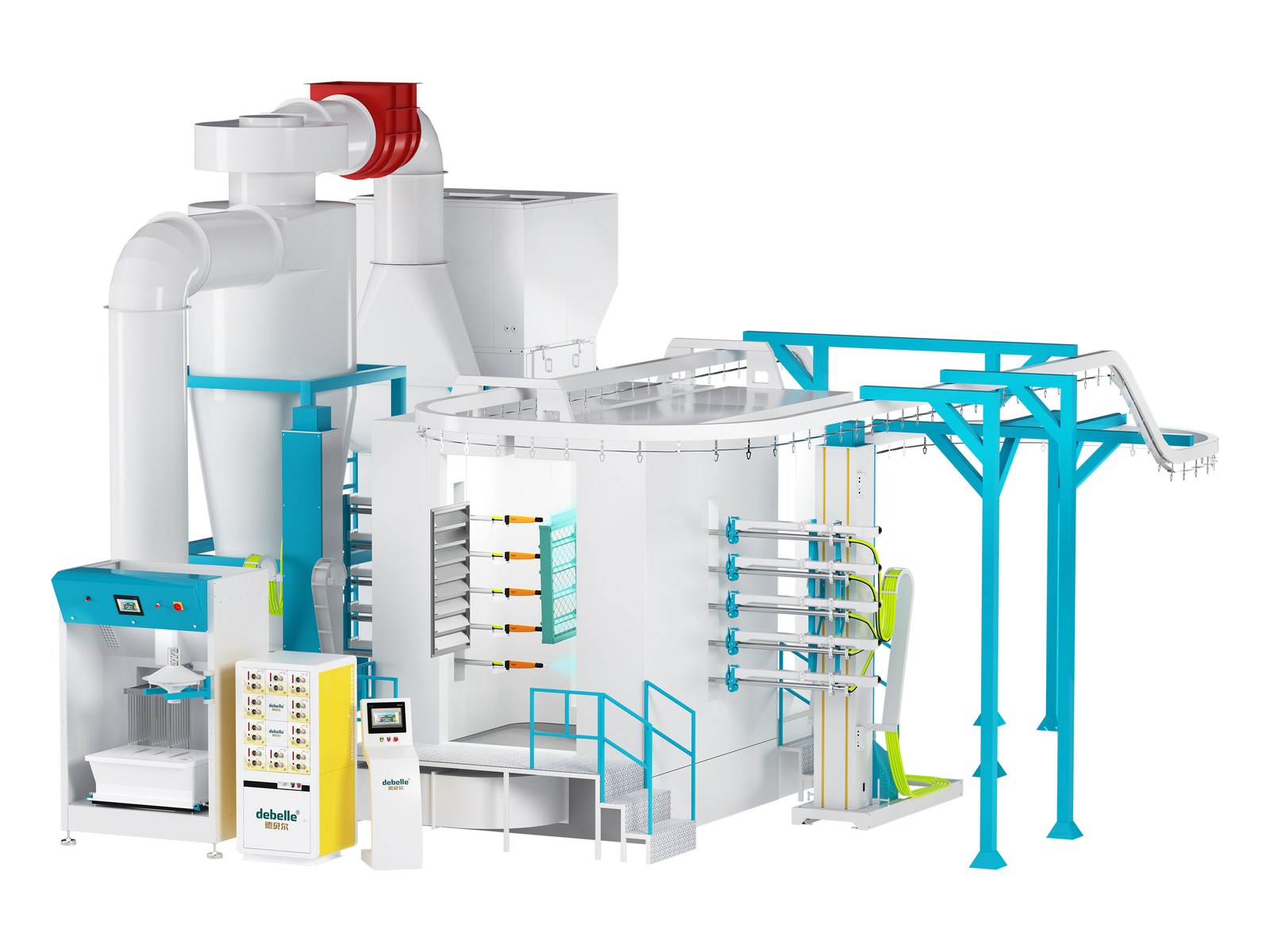
People searching “powder coating machine price in India” usually do not want a number. They want to know why two quotes for the same job differ, and what the difference actually buys. Here is the short answer: the gap comes from five items you can list separately — gun type and control method, powder feed and powder path, degree of automation, supply voltage and supplied accessories, packing and service tier. Until those five are lined up, comparing totals tells you nothing.
1. Break the price into five comparable items
Do not compare totals first. Put both quotes side by side against the list below and ask about any blank cell.
| Source of difference |
Typical tiers |
Why it changes the price |
What to ask |
| Gun type and control |
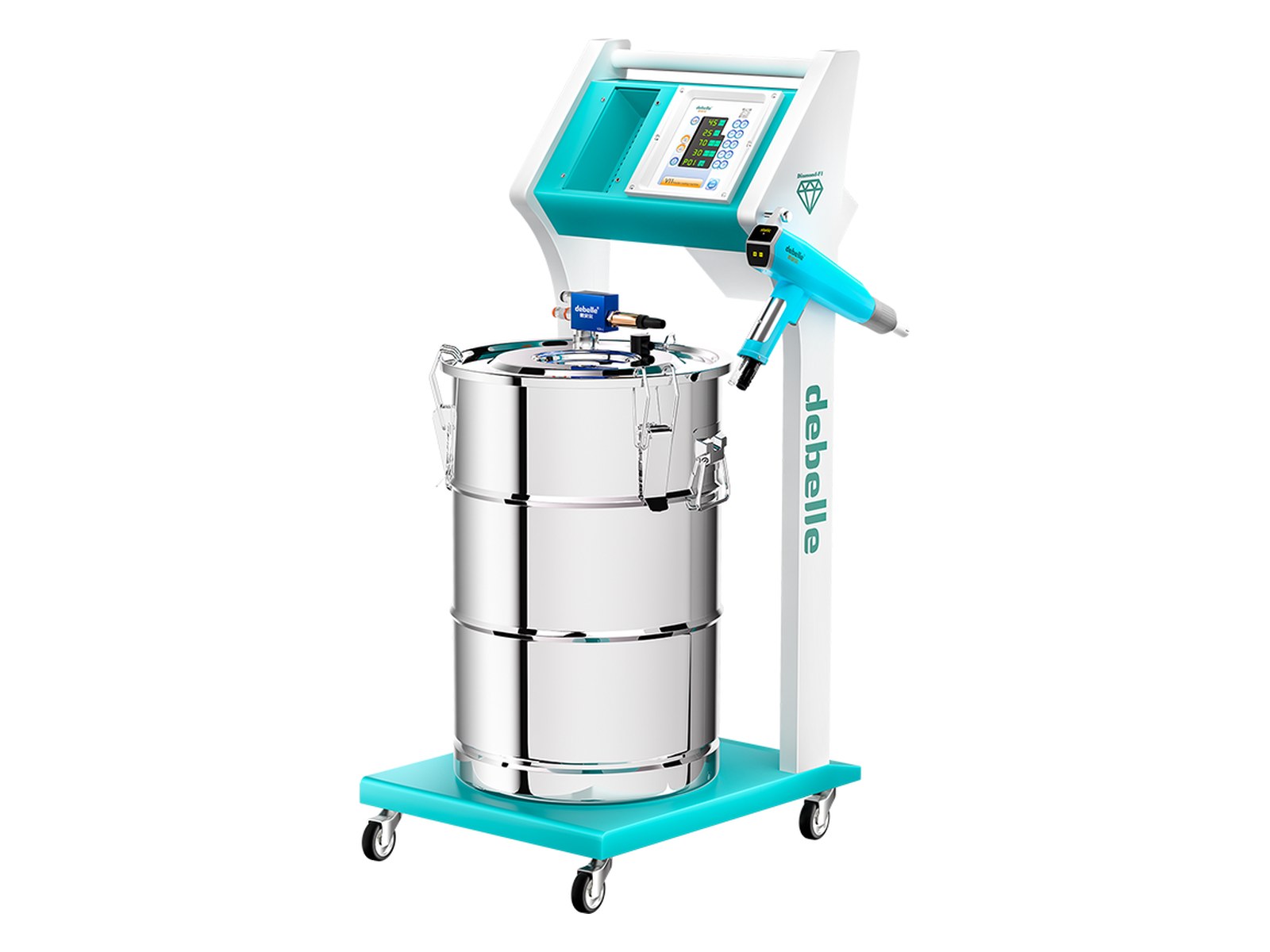
Pressure-regulator type (E7, TOP960) vs electronic flow-valve type (V11, V12, T30 series) |
Adjustment accuracy and repeatability differ; this is the main price driver |
Is output set by a regulator knob or by a digital value |
| Powder feed |
Direct suction per gun vs integrated feed centre |
A feed centre combines hopper, fluidisation, pumps and colour-change parts; it is not a sum of single parts |
Does the quote include a feed centre, and how many pumps |
| Automation level |
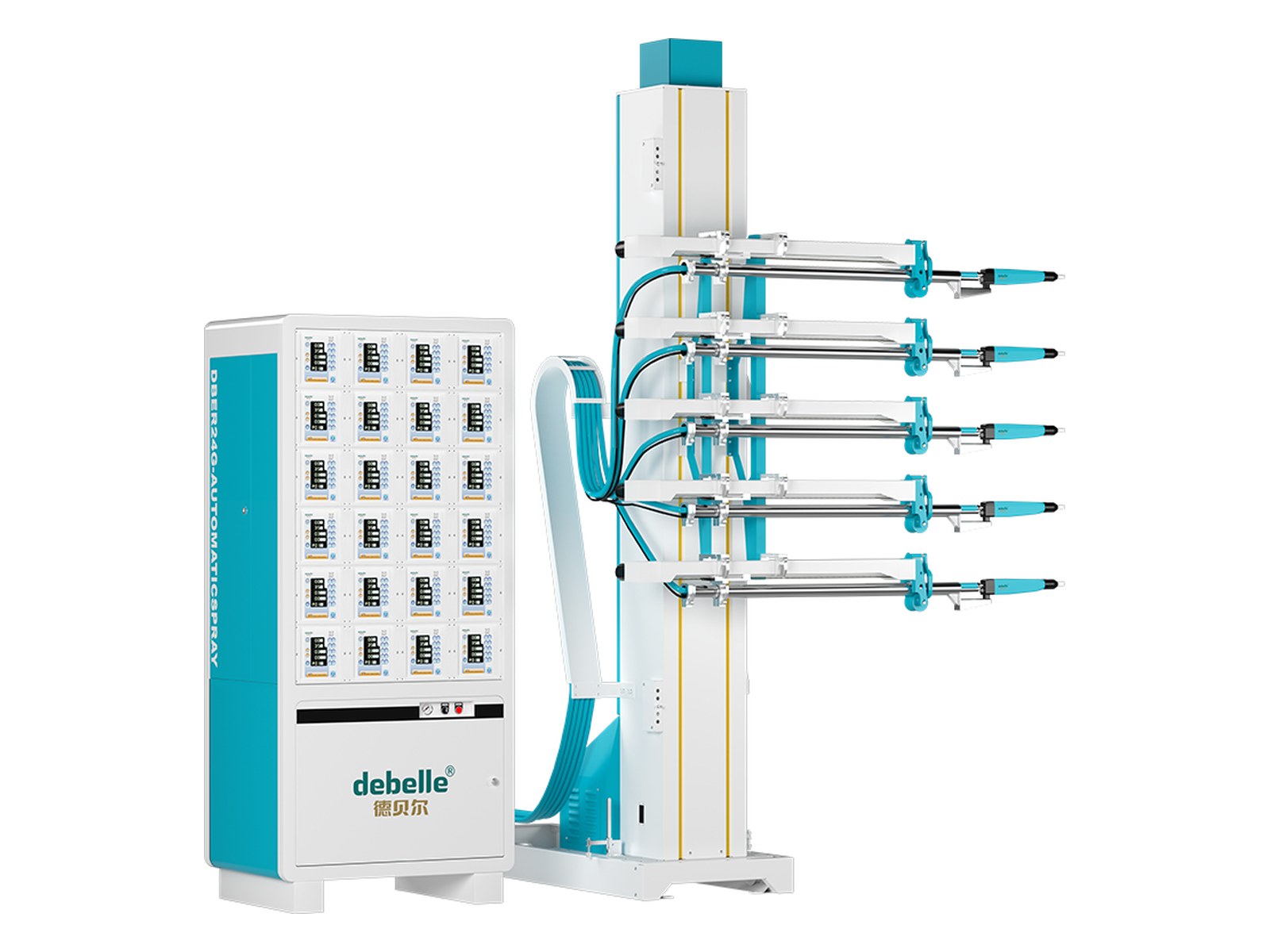
Manual gun / automatic gun / automatic gun with reciprocator / full line interlock |
Each step up adds a control and movement layer |
Decide by daily output and part height, not by appearance |
| Voltage and accessories |
Three-phase input vs single-phase input; hose length, nozzle sizes, extensions |
Wrong input means a transformer; accessories decide whether you can start up |
Input configuration and the accessory list, item by item |
| Packing and service tier |
Export packing; remote guidance vs on-site service |
Different service tiers change the total |
Which tier is inside the price, and how on-site work is charged |
2. Six questions Indian buyers ask
1. Can we connect it straight to our supply?
Read the nameplate, not a rule of thumb. On the 960 control system, for example, the power input is rated 3×400 VAC + N + PE (or 100–120 VAC with a transformer), the gun controller takes 100–240 VAC and the axis controller 200–240 VAC, at 50/60 Hz, with an operating temperature of 10–40 °C. Three-phase 415 V, 50 Hz is common on shop floors here, so check three things before wiring: is the feed three-phase five-wire, are N and PE kept separate, and how wide is the voltage swing? Where the swing is wide, the solenoid valves and controllers on the air circuit are the first to suffer — add a stabiliser and a filter ahead of the valve, and you replace fewer parts.
2. What is actually inside the price?
Tick six boxes: machine, supplied accessories, packing, freight, service tier, taxes. Whether the Incoterm is ex-works or delivered, how the payment milestones are staged, and how long the quote stays valid all belong on the same sheet. Different terms mean the numbers were never comparable.
3. Is one gun enough, or do we need automatic?
Three conditions decide it: parts hung per shift, height variation across parts, and colour-change frequency. Few parts, little height variation, frequent colour changes — a manual gun is enough, something like the E7 manual electrostatic gun with a pressure regulator. Steady batches and tall parts point to an automatic gun on a reciprocator, with the stroke set by part height. Many colours in small batches: look at the feed centre and the gun-cleaning function, because colour-change time is the bottleneck.
4. What changes in a hot, humid monsoon climate?
Three actions: dry and de-oil the air supply (refrigerated dryer plus filter, inlet pressure set at 0.6 MPa), store powder and reclaimed powder away from humidity, and ventilate the control cabinet against dust. Humidity acts directly on electrostatics: the actual output voltage at the gun head is allowed to deviate from the controller display by roughly one tenth, and that deviation tracks air humidity. Do one voltage calibration at acceptance, at the humidity you actually run in, and record the real output.
5. What if spare parts are not available locally?
Stock the wear parts with the machine, with intervals set by powder throughput: venturi 3–6 months, internal powder hose 1–3 months (shorter on automatic guns), nozzle 6–12 months, discharge needle 3–6 months, seals 6 months, adjusted to your working conditions. When ordering, confirm which models each part fits — stock common parts deep and model-specific parts by machine count. A worn venturi opens up and the output drifts with it, so these are cycle-replacement parts, not run-to-failure parts.
6. How are installation and training charged?
Remote guidance (phone, video) and on-site service are two different tiers. On-site work normally leaves travel to the buyer, with labour charged per day. Ask which tier sits inside the price, how many people for how many days, and whether training covers the operators or only the equipment supervisor.
3. Match the gun to the part and the line
Parts come first, line second.
| Site situation |
Suggested tier |
Why |
| Flat parts, one shift, small batches, budget matters |
E7 or TOP960 (pressure regulator) |
Simple structure, adjustment by regulator, low maintenance threshold |
| Tight film-thickness consistency, digital setting needed |
V11 / V12 (electronic flow valve) |
Output set as a number, so a different operator repeats the same result |
| Frequent colour changes, less parameter tweaking |
T30 series |
Built-in programs for metallic, textured and flat powders, plus gun cleaning |
| Area with an explosion-hazard classification |
ES600 |
Choose by the classification on site, not by price |
| Standard automatic line |
V12 automatic gun on a reciprocator |
Stroke follows part height, gun distance 200–300 mm |
| High output with line-wide interlock |
T30L with a central control system |
Multiple hosts linked, each still able to run on its own |
4. Air, grounding, piping: three site conditions people skip
- Air: inlet pressure set at 0.6 MPa, with water and oil removed. Wet air makes powder cake inside the hose, which shows up as spitting and unstable output.
- Grounding: gun body, hangers and booth grounded separately, with the earth rod driven to the depth the local code requires, typically 2 m. Powder build-up on hangers breaks that path, and the symptom is poor deposition, most visible in corners.
- Main piping: vertical lines with many guns take a 4-inch DN100 pipe, horizontal lines with fewer guns a 2.5-inch DN65. Undersized piping drops pressure at the far end when several guns fire together.
Troubleshooting path
| Symptom |
Likely cause |
How to confirm |
| Machine will not power up, breaker trips |
Voltage or phase configuration mismatch |
Check nameplate input against the shop feed; confirm three-phase five-wire with N and PE separate |
| Poor deposition, bare corners |
Voltage setting mismatched to the part, or bad grounding |
Measure actual output at the gun head with an electrostatic meter, then check the hanger ground path |
| Powder cakes and the gun spits in the rainy season |
Moisture in the air supply or in the powder |
Check dryer drain volume; feel whether powder in the hopper has clumped |
| Solenoid valves fail repeatedly |
Voltage swing, oil in the air line |
Fit a stabiliser and a filter ahead of the valve; log the incoming voltage swing |
Self-check list
Send us part photos, dimensions, daily output and your incoming supply details, and we will build the configuration on this logic. Where a value is uncertain, we run a sample spray first and set parameters from measured data. You can also reach us through the contact page.