
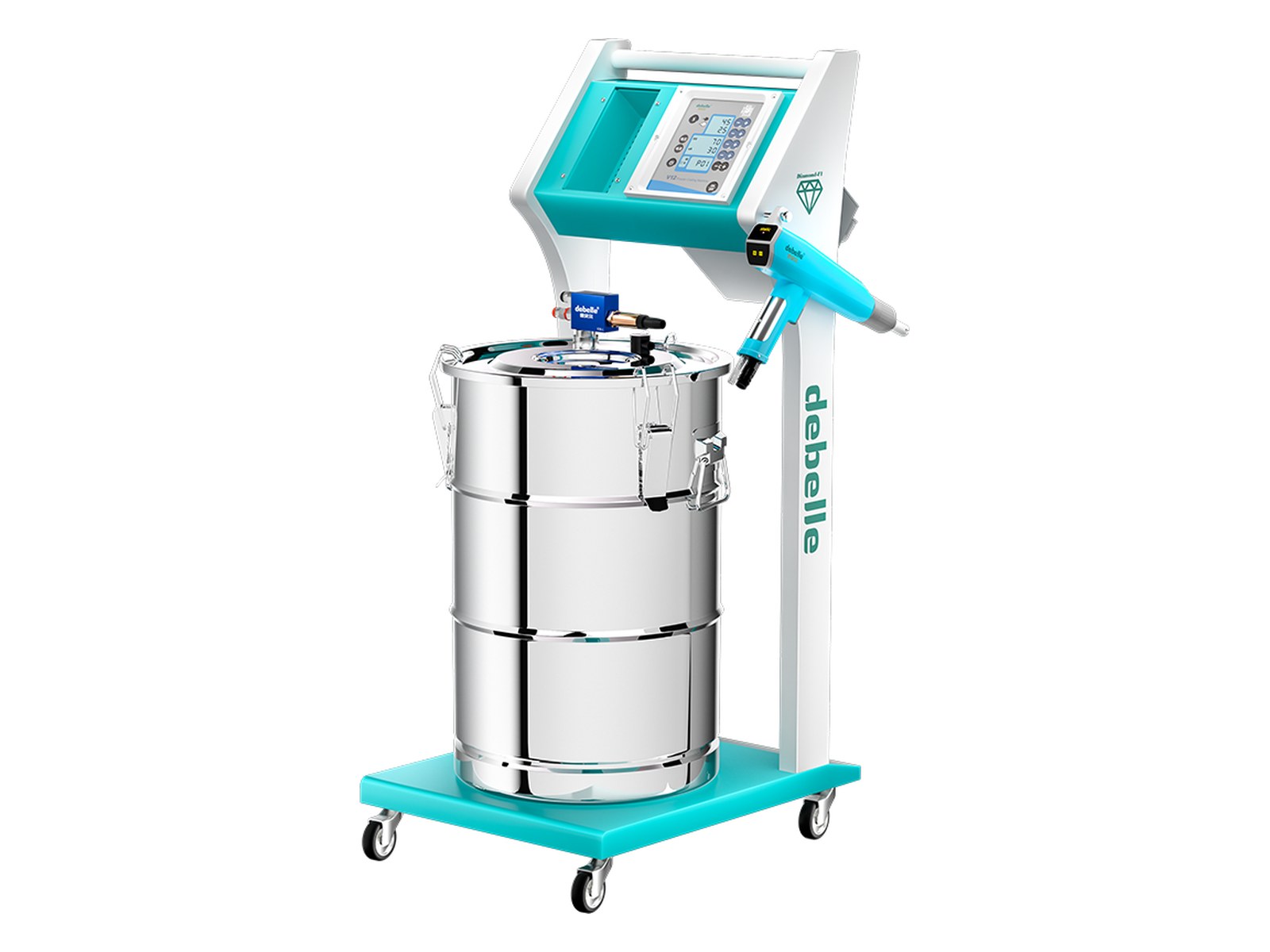
V12 Manual Electrostatic Powder Coating Gun
The all-round CNC machine, all in one step: 0-100kV with LCD display, 20 main programs + over 500 sub-programs storage, one-touch gun purge — covering all the capabilities of the E7 and 960.
View details →
Constant gun travel on long parts, color change downtime and hanger conductivity are the three key points of an aluminum profile line.
Aluminum profiles are characterized by long individual pieces, large batches and many colors. A profile is often 3–6 metres long, and hanging height on a vertical line can reach 4–7 metres. This means:
Automatic reciprocating coating is the basic configuration for an aluminum profile line, not an upgrade option. Manual electrostatic powder coating guns are used here mainly for touch-up and rework.
A typical vertical line cell:
| Stage | Configuration points |
|---|---|
| Hanger | Aluminum alloy hangers; check conductive surface oxidation regularly |
| Pretreatment | Chromating or passivation; film quality directly determines adhesion |
| Coating | Reciprocator + multiple automatic guns; stroke matched to workpiece height |
| Powder feed | Centralized powder feed center; multiple hoppers can be fitted for rotation between colors |
| Recovery | Cyclone + filter cartridge two-stage recovery; reclaimed powder must be sieved before blending |
| Curing | Follow the powder supplier’s curve; avoid overbaking, which causes color deviation |
Color change time is mainly spent in four places: purging the powder path, cleaning the booth, switching the powder feed, and residue in the recovery system.
Actions that can be optimized:
After long use, an oxide layer and cured powder accumulation form on the hanger surface and conductivity drops. It shows up like this: parameters unchanged, but transfer efficiency declines month by month and edges become increasingly hard to coat.
Maintenance recommendations:
Many factories spend heavily on new guns when the problem is actually the hangers.
Long parts with a long single-face stroke make it hard for manual gun travel to stay constant, causing film thickness to differ at the two ends
Many colors and small individual batches mean long color change downtime, so small orders are hard to accept
Hanger conductivity declines after long use and transfer efficiency falls month by month with no obvious cause
Vertical lines handle tall workpieces, where edges and recesses easily end up with bare substrate
The all-round CNC machine, all in one step: 0-100kV with LCD display, 20 main programs + over 500 sub-programs storage, one-touch gun purge — covering all the capabilities of the E7 and 960.
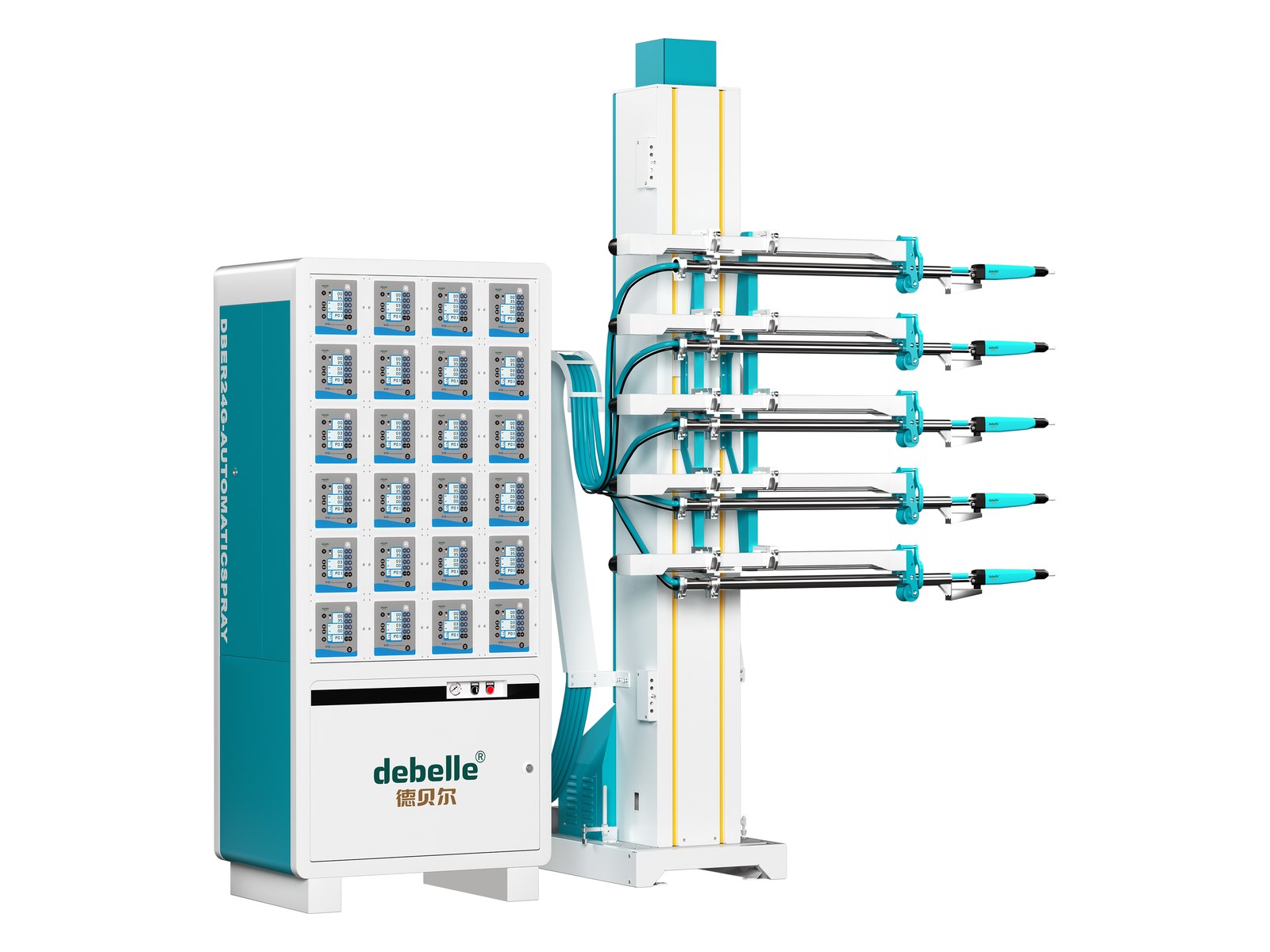
CNC automatic flagship with one-touch gun purge, multi-gun interlock control, and cross-backup control units that keep production running — the core solution for large powder booth automatic lines.
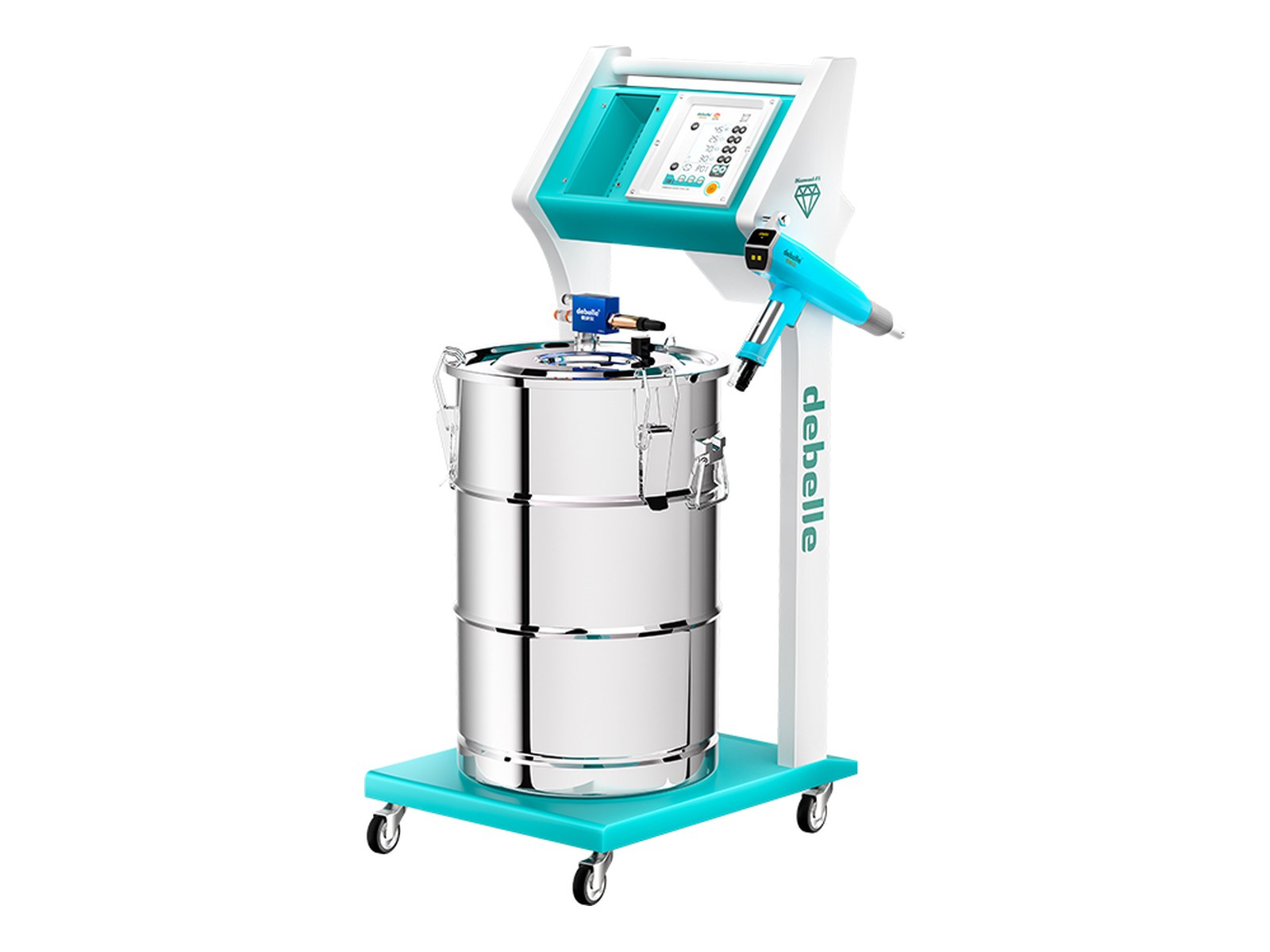
Recommended high-efficiency, energy-saving model: upgraded screen + beginner data packages (flat/texture/metallic powder one-touch spraying) + tri-proof high-voltage module + lightweight 380g gun body.
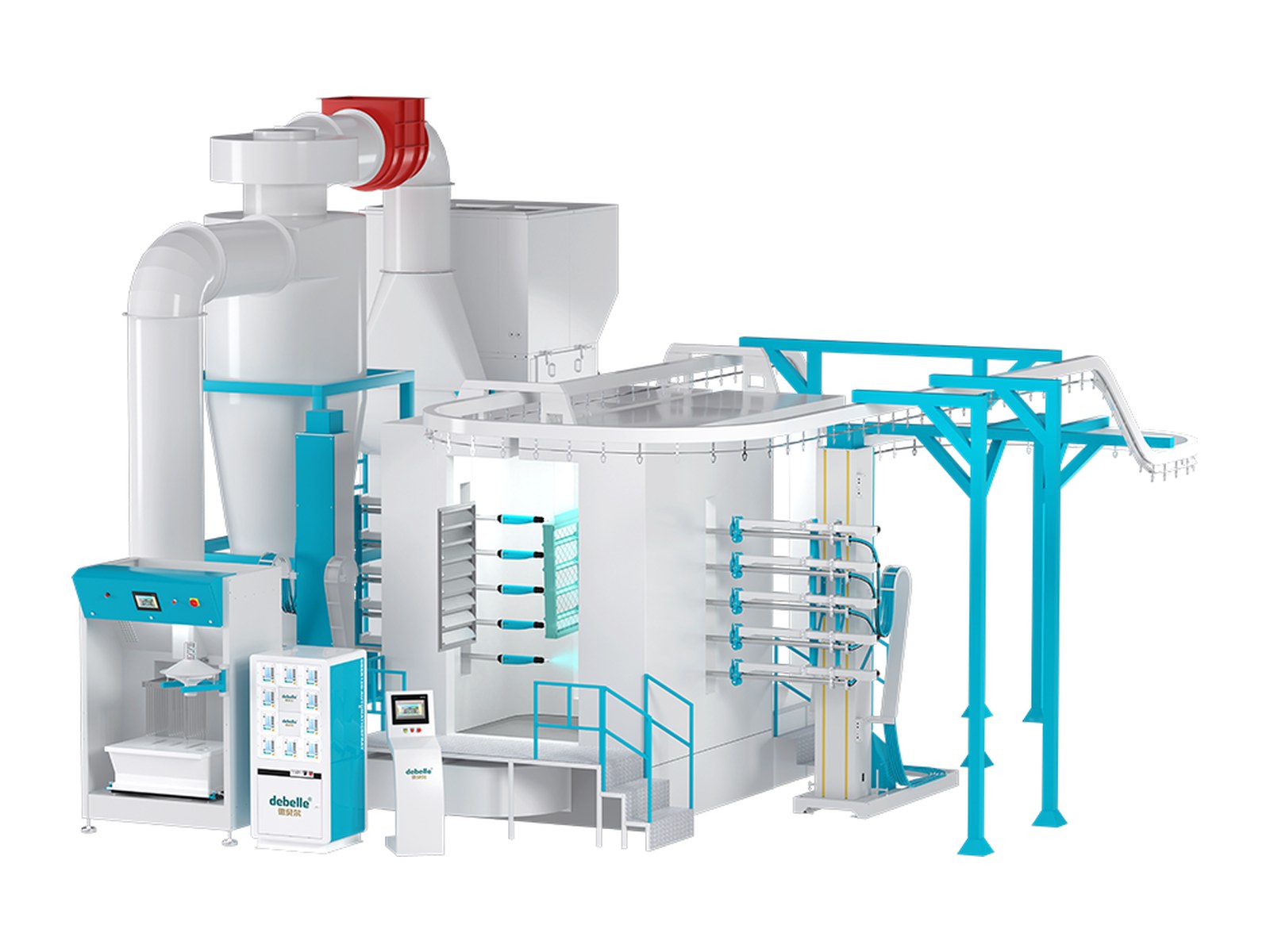
The main automatic gun for vertical lines, adding three data packages on top of the CNC platform, and combinable with a powder feed center into a complete automatic coating solution.
Provide workpiece dimensions, material, daily output and powder model — we deliver a selection proposal and configuration list.