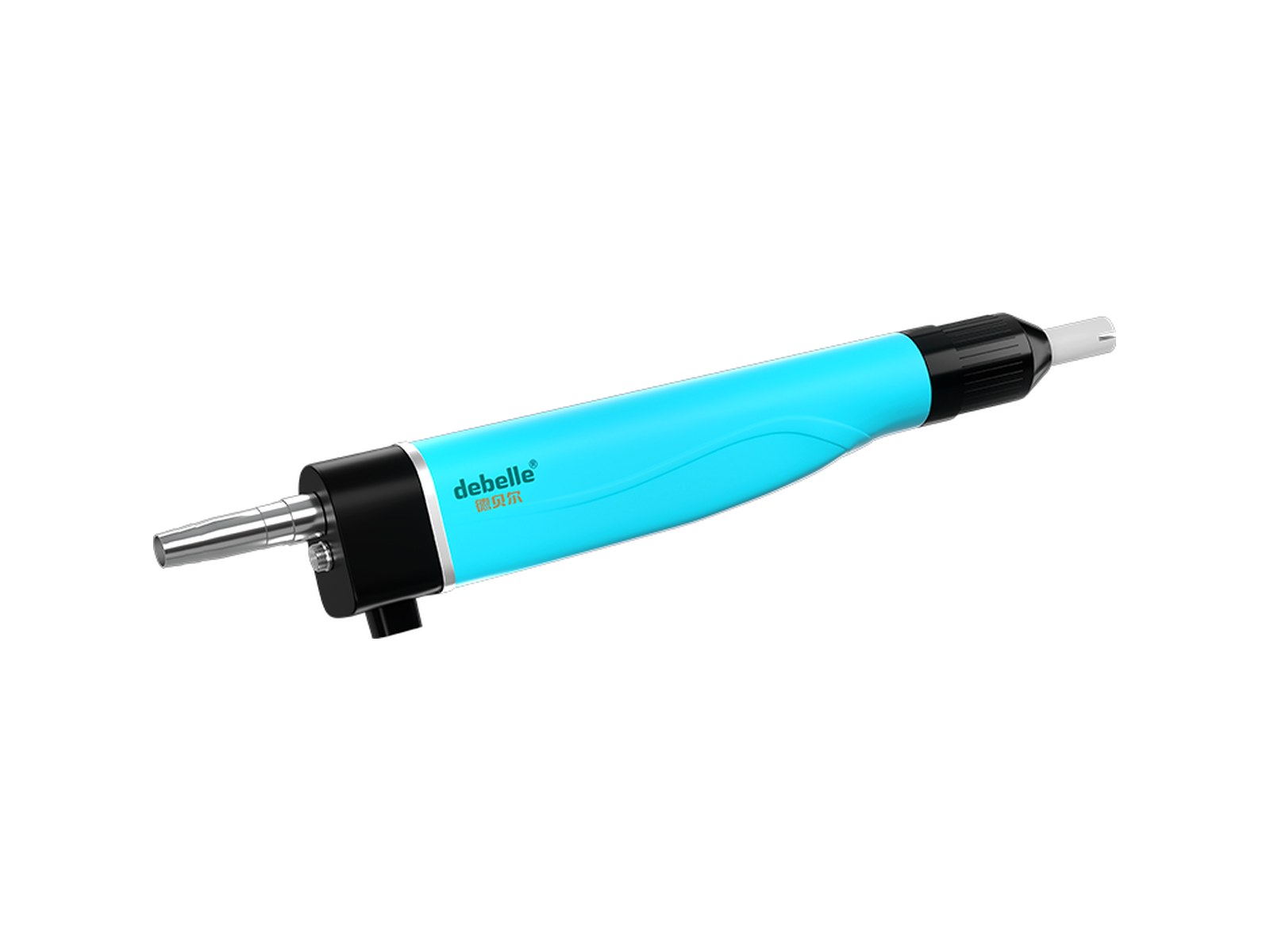
Powder coating is a finishing process that replaces liquid paint with solid powder: the powder particles carry an electrostatic charge, stick to a grounded metal part, and then melt and crosslink in a curing oven to form a dense protective film. No organic solvents are involved, and oversprayed powder can be recovered and reused. That is why powder coating has become the mainstream finishing process for home appliances, auto parts, aluminum profiles, and furniture hardware.
The Working Principle: Four Steps from Powder to Film
The core of electrostatic powder coating is making the powder “stick” to the part by electric force, not by air pressure. The process runs in four steps:
Step
What happens
What to control
Powder convey
A venturi pump feeds powder from the hopper to the gun through the powder tube
Stable air pressure, well-fluidized powder
Powder charging
Powder passes through a high-voltage electrostatic field and picks up a negative charge
Voltage and current set by part type
Atomize and attract
Charged powder is atomized at the nozzle and driven onto the grounded part by the electric field
Stable gun distance and travel speed
Cure
The part enters the curing oven; the powder melts, levels, and crosslinks into a film
Oven temperature and dwell time
Even coverage on edges and flanges comes from electrostatic attraction: the part is grounded, the powder is charged, and the field pulls particles onto the surface. This only works when the part is well grounded. Poor grounding leads to slow deposition, uneven film, and in the worst cases spark risk. For parameters across different gun models, compare the DEBELLE powder coating gun lineup.
What a Complete Powder Coating Line Looks Like
A typical line has three stages: pretreatment, spraying, and curing.
A common industrial pretreatment sequence is: hanging, pre-degreasing, degreasing, rinsing, rinsing, surface conditioning, conversion coating (phosphating), rinsing, rinsing, and drip-dry. Stainless steel parts usually need an acid pickling step after degreasing. The goal of pretreatment is simple: a clean, dry, oil-free surface. Craters in the final film can often be traced back to incomplete degreasing, detergent residue, or oil and water in the compressed air.
Stage
What it solves
What to control
Pretreatment
Remove oil and rust, build a conversion coating for adhesion
Bath concentration, rinse quality, dry parts
Spraying
Even powder deposition and controllable film thickness
For curing, a common industry reference window is a part temperature of 150–200 degrees Celsius held for 15–20 minutes. Always follow the curing data sheet of the specific powder instead of guessing — each formulation has its own melt-and-level window.
Typical Settings by Part Type
Voltage and current needs differ by part. The ranges below are common shop-floor references; final settings follow the powder data sheet and test spraying:
Part type
Voltage
Current
Metallic powder (with aluminum flake)
60–80 kV
30–50 μA
Flat parts, smooth powder
70–90 kV
40–60 μA
Parts with grooves and cavities
60–80 kV
30–50 μA
Recoated (re-spray) parts
20–40 kV
10–30 μA
The logic: flat parts spray easily and take full voltage. Grooved parts suffer from the Faraday cage effect — field lines cannot reach inside cavities, and excess voltage makes rejection worse. Recoated parts carry an insulating film, so voltage must be lowered to avoid powder rebound and patchy appearance.
Where Powder Coating Fits
In one sentence: any conductive metal part that can be grounded and can tolerate curing temperature is a candidate. Typical applications:
Home appliance sheet metal: enclosures, panels, structural parts where appearance and film uniformity matter (see the appliance sheet metal industry page)
Auto parts: brackets, chassis components, wheels — adhesion and salt-spray resistance matter
Aluminum profiles: windows, doors, curtain walls — large batches with stable film thickness
Furniture hardware, steel pipes and guardrails, lighting, fitness equipment — mixed products, frequent color changes
Parts needing thick or insulating films, such as new-energy battery housings, with dedicated powders and processes
What does not fit: standard powders cure above 150 degrees Celsius, so ordinary plastic or wood parts deform if sprayed directly. They need low-temperature-cure powders and a dedicated process, which is beyond this article.
When the Film Fails, Which Stage First?
Powder coating is a system — powder, pretreatment, spray parameters, and curing all show up in the final film. Troubleshoot by symptom:
Symptom
Likely cause
Check first
Craters (small volcano-like pits)
Incomplete degreasing or rinsing, oil or water in compressed air, damp or contaminated powder
Check degreasing and rinsing, drain the air tank, reseal powder bags
Slow or uneven deposition
Poor part grounding, unstable air pressure
Check ground rod depth and contact points, verify air supply
Control film thickness to spec instead of adding more
Self-Check List
Grounding is solid: ground rod about 1.5 meters deep near the booth, contact points free of paint film and rust
Air supply is clean: air tank drained on schedule, air lines routed separately from the booth
Pretreatment is complete: water-break-free surface, parts dry without water stains
Powder is in good condition: bags resealed against moisture, thorough cleanup at color change, reclaim powder blended at a controlled ratio
Parameters are logged: voltage, current, and air pressure recorded per part type
Curing is verified: oven temperature and dwell time confirmed against the powder data sheet
Environment is controlled: workshop temperature 5–30 degrees Celsius, humidity within limits, clean site, working ventilation
Powder coating is not hard to understand — the difficulty is doing every stage right. If you are selecting equipment or debugging a line, send us the part photos, dimensions, and daily output through the contact page. We will suggest a configuration based on the same logic, and ship samples for trial spraying when needed, so the decision is made on measured data.
Related Equipment
Models commonly used in this situation — tell us your workpiece and we confirm the fit:
DEBELLE's classic entry-level manual electrostatic powder coating gun with adjustable 0-85kV output and automatic voltage tracking by gun distance. A cost-effective choice for flat panels and small-to-medium batches.
The all-round CNC machine, all in one step: 0-100kV with LCD display, 20 main programs + over 500 sub-programs storage, one-touch gun purge — covering all the capabilities of the E7 and 960.
CNC automatic flagship with one-touch gun purge, multi-gun interlock control, and cross-backup control units that keep production running — the core solution for large powder booth automatic lines.
The high-end automatic gun of the V series and the gun head platform of the Kingkong F1 automatic version — usable standalone on automatic lines or combined with the F1 control cabinet.
View details →
Need a Proposal for Your Workpieces?
Provide workpiece dimensions, material and daily output — we deliver selection advice and a configuration list.