Buy a powder coating gun on unit price alone and the difference usually comes back in year two, in two places: waiting for wear parts, and waiting for a service engineer. An electrostatic powder coating gun is a wear-part-driven machine — the control cabinet and high-voltage module last years, but venturi pumps, powder hoses and electrodes get replaced by the month. So when comparing imported and domestic guns, the unit price alone tells you little. Split the comparison into three accounts: parts, service and downtime.
One: total cost of ownership is not the purchase price
Over the life of a gun, the money goes into four buckets: purchase price, spare parts, after-sales service and downtime. The first is fixed on signing day; the other three depend on the supplier’s parts network and service terms. A common pattern in this industry: a cheap gun with long parts lead times and no service commitment can cost more per year than a pricier gun with a local parts warehouse and response times written into the contract. So before signing, nail down the last three buckets, then look at the price again.
Two: the parts account — consumption rhythm first, lead time second
The wear parts on a gun follow a rhythm. The table below shows commonly cited replacement intervals; for your own line, let monthly inspection records be the reference:
| Wear part |
Common interval |
Notes |
| Venturi pump |
3–6 months |
Depends on powder throughput; adjust to conditions |
| Powder hose (inner) |
1–3 months |
Automatic lines run longer, wear faster |
| Electrode pin |
3–6 months |
Depends on voltage setting |
| Seals |
Around 6 months |
Replace preventively |
| Nozzle |
6–12 months |
Avoiding knocks extends life |
| Solenoid valve |
12–24 months |
An air-line filter extends life |
(A note on sourcing: the table reflects common industry practice; confirm against on-site measurement and the equipment manual.)
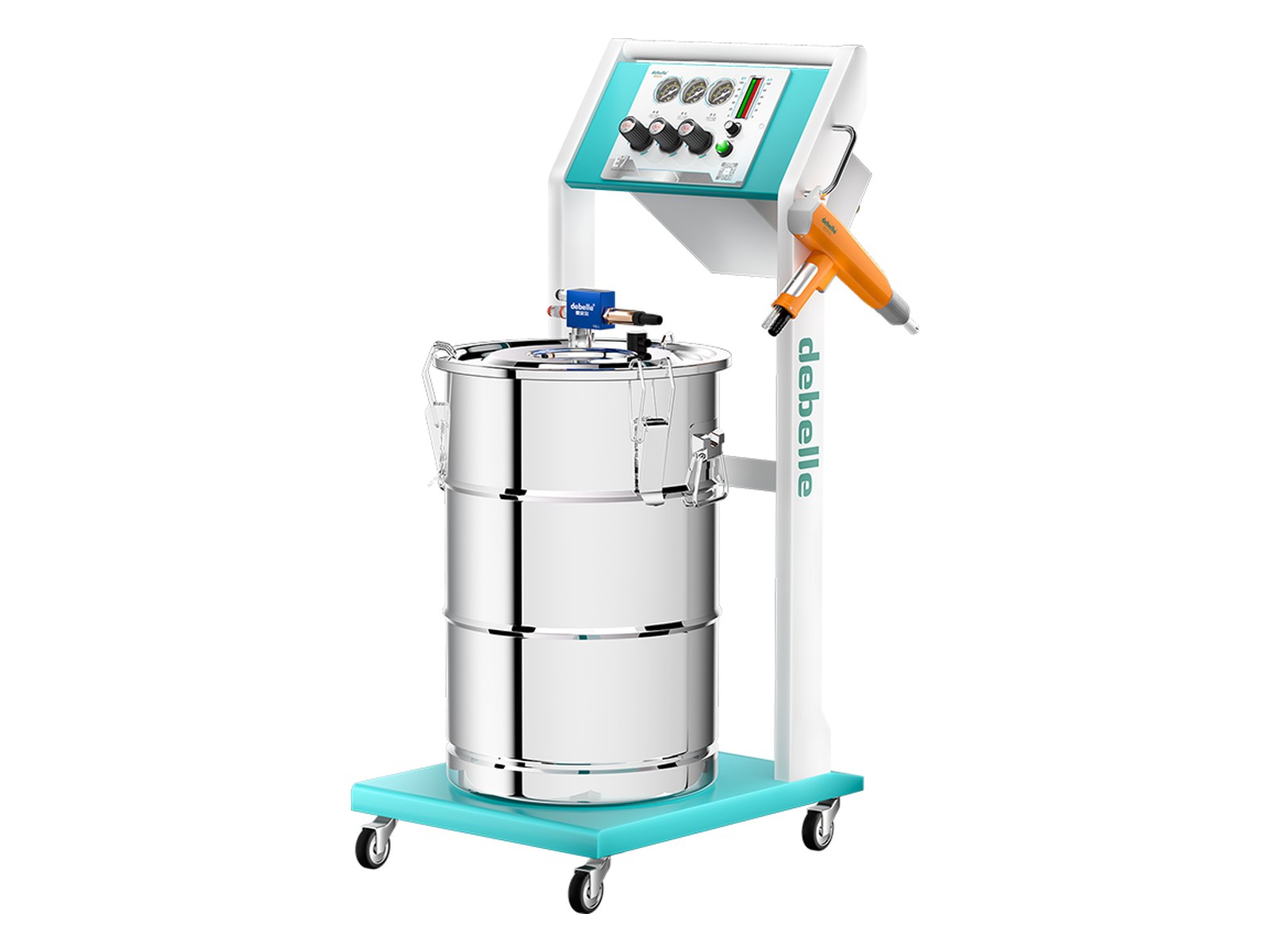
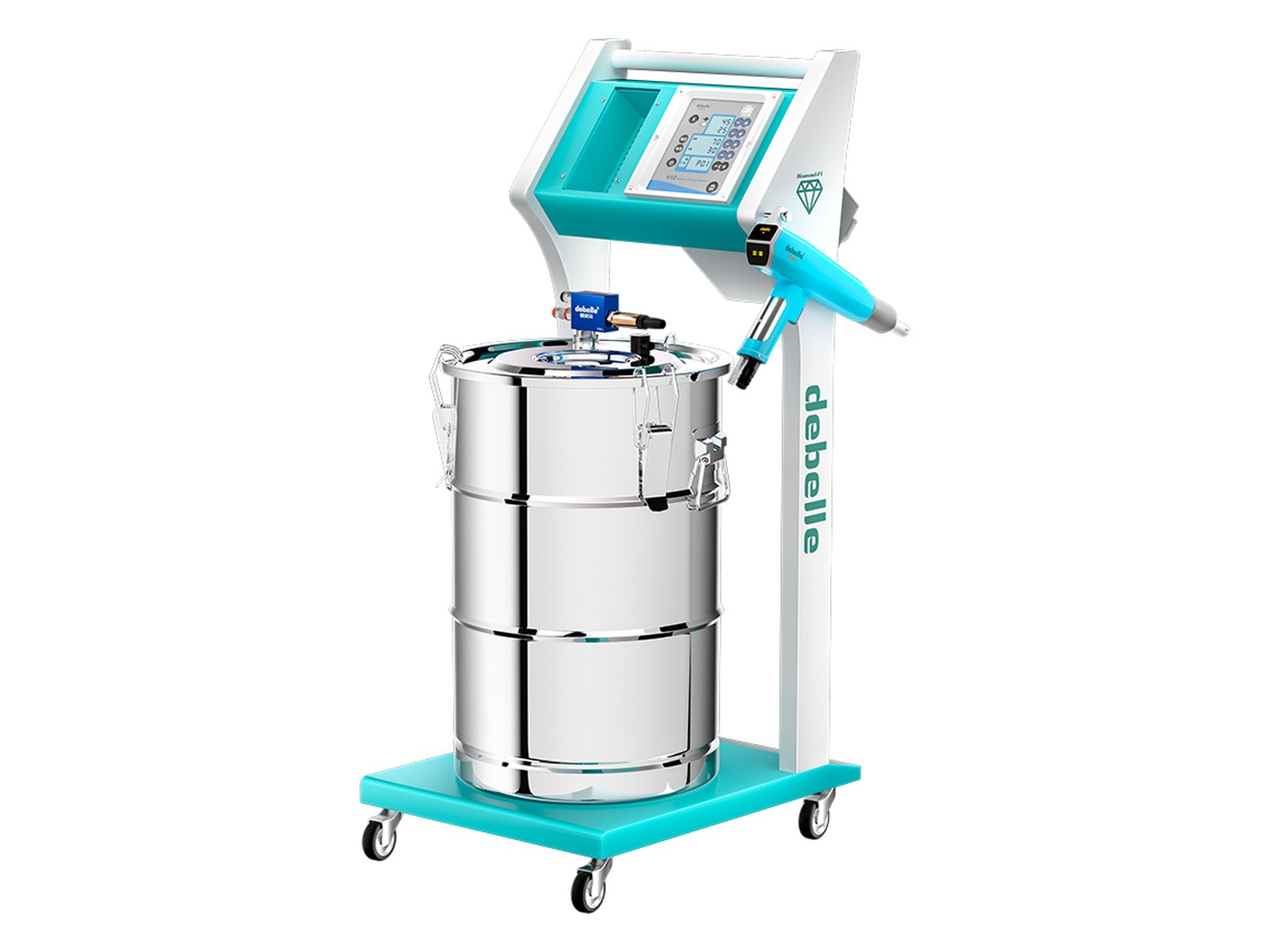
Once you know the rhythm, ask the supplier for two numbers: first, whether common wear parts are stocked in your region, and where; second, how many working days pass between payment and dispatch when you order. Parts supply contracts in this industry often state “dispatch within a stated number of working days after payment” — turn that number into a written clause before signing. Imported brands often ship parts from the factory or an overseas warehouse, so clearance plus international freight puts the cycle on a weekly scale; a domestic supplier with a local warehouse can work on a daily scale. The test is simple: ask the supplier to put your model’s wear-part list, unit prices and dispatch times on one page. Who provides it, and how clearly, tells you how their after-sales holds up. Take the E7 manual powder coating gun as an example: its delivery scope lists a full nozzle set and electrode cleaning-air hose among the items shipped with the gun — that one-page list is exactly what you should request from any supplier.
Three: the service account — read the contract, not the brochure
Judge service by the contract, not the sales pitch. A clearly written service clause usually has three tiers: phone or video guidance; if that fails, express-delivery of parts; if that fails, an engineer on site. Before signing, turn each tier into a specific number — within how many hours the engineer arrives in a domestic emergency, within how many working days for non-urgent visits; for overseas projects, state the on-site arrival window in working days. If a supplier cannot put these in writing, the “24-hour response” on the brochure deserves a question mark.
Read the warranty scope line by line too. Whether the brand is imported or domestic, many contracts exclude — and may terminate the warranty for — these situations: dismantling or modifying the equipment without consent; using spare parts not supplied by the original manufacturer; human-caused damage. So before switching to third-party compatible parts, get written confirmation of how they affect the warranty. Do not trade warranty coverage for the difference in part price.
Four: the downtime account — what a day of waiting costs
Downtime loss can be estimated with one line: downtime hours × (hourly line output + idle labor + recovery costs). Where the five numbers come from:
- Hourly line output: monthly output divided by actual monthly running hours;
- Number of idle workers and their hourly wage;
- Recovery cost for delayed orders: overtime, outsourcing, upgraded shipping;
- Waiting time: hours from the breakdown report to the part in hand;
- How long your own stock lasts: how many sets of common wear parts you hold.
Which parts stop the line the moment they fail? Use this table:
| Spare part |
If it runs out |
Suggested stock |
| Powder hose, venturi pump |
Powder flow stops or turns unstable; line stops |
Keep 1–2 sets |
| Electrode pin |
Voltage fault, poor charging |
Keep in stock |
| Nozzle |
Worse spray pattern; brief reduced speed is possible |
Keep 1 set |
| Solenoid valve, seals |
Can run short-term; replace on schedule |
Stock per cycle |
The longer the waiting time, the thicker your own stock needs to be. This is where imported and locally supplied parts really diverge in the total account: not the unit price of the part, but the gap between failure and replacement.
Five: six questions before signing — the same list for both
No need to pick a side first. Ask both sides the same six questions:
| Question |
Written evidence to obtain |
| Are common wear parts in stock, and where |
Wear-part list with stock location |
| Working days from payment to dispatch |
Dispatch time written into the contract |
| Response time for each service tier |
Service terms written into the contract |
| What the warranty covers and excludes |
Contract text, read line by line |
| Do third-party parts affect the warranty |
Written confirmation |
| Is there training and documentation |
Manual and training arrangement |
If both sides answer all six in writing, the after-sales hurdle is cleared no matter which country the brand comes from. Vague answers deserve caution, however low the purchase price.
Checklist
Send us photos of your workpieces, their dimensions, daily output and the current line setup, and we will work through this account with you to propose a configuration and a wear-part list — with sample spraying first if needed, so the decision rests on measured results. Feel free to contact us.