

V12 Manual Electrostatic Powder Coating Gun
The all-round CNC machine, all in one step: 0-100kV with LCD display, 20 main programs + over 500 sub-programs storage, one-touch gun purge — covering all the capabilities of the E7 and 960.
View details →
Ask “how much does a powder coating equipment set cost?” and quotes can differ by three to five times. That is not random pricing — the two suppliers are usually not quoting the same scope. Four variables set the number: part size and hanging density, daily output and chain speed, number of colors, and how much site preparation is already done. Put those four on the table first, and quotes become comparable.
Powder coating equipment is not sold per unit. It is sold by section of a line. Ask the supplier to itemize as below, and you can see where the money goes and which block can wait.
| Cost block | Main items | Where quotes get vague |
|---|---|---|
| 1 Guns and control | Controller, gun body, gun cable, powder pump, hose | Gun count and spares; whether channels can be grouped and isolated |
| 2 Powder feed and color change | Feed center or hopper, fluidization, level detection | Skippable when color count is low |
| 3 Booth and recovery | Enclosure, filters, recovery fan, cleaning system | Filter consumables and powder sieving are recurring costs |
| 4 Conveying and curing | Chain, hangers and fixtures, curing oven, temperature control | Hanger count; who verifies the oven curve |
| 5 Air, electrical, installation | Compressor, drying and oil/water removal, controls, grounding, site installation | Dryers, ground rods and civil work are frequently dropped |
Blocks 1 to 4 are the equipment itself. Block 5 is where budget risk concentrates: it covers both equipment that must be installed (air and electrical) and services that are easily promised verbally as “included” (installation and commissioning).
The same budget for 100 guns produces very different results on guardrail mesh and on aluminium profiles. The pricing logic sits on four variables.
| Variable | Which block it moves | How to pin it down |
|---|---|---|
| Part size and hanging density | Gun count, lifter stroke, booth size | Measure the part and lay out the fixtures — do not estimate |
| Daily output and chain speed | Gun count, oven length | Chain speed sets dwell time per gun, so calculate the two together |
| Number of colors | Whether a feed center is needed | One color change a day and six lead to different decisions |
| Site preparation | Block 5 cost | Confirm mains power, air, grounding and floor status before delivery |
More guns is not automatically better. Vertically, a lifter has to sweep the full height of the part, and complex shapes usually need an extension rod — confirm both with the supplier before the equipment ships. On an automatic line, models such as the V12 automatic powder gun should have gun count and lifter stroke decided together.
Color count decides whether a powder feed center earns its place. Its whole purpose is fast color change: the powder box from the supplier sits where the fluidized hopper would be, and goes back to the warehouse afterwards; fluidization, level detection, return of reclaimed powder and automatic cleaning of the powder path are integrated. When you run few colors, this block can come out of the quote and be added later.
You can negotiate the spray section price down. You cannot negotiate powder consumption down. Powder is a recurring cost, and settings left unoptimized cost money every day.
Keep gun-to-part distance between 200 and 300 mm. Closer tends to produce orange peel; farther gives poor deposition. Hold the gun perpendicular to the part surface, or film thickness will vary. Set air supply pressure to the nameplate requirement, commonly around 0.6 MPa (about 6 kgf/cm²); low pressure shows up directly as weak powder output. Voltage, current, powder output and atomization are set by part shape and chain speed — a flat panel and a deep channel are not the same recipe.
To judge whether your settings are stable, start with one habit: fix the part and the fixture, change one variable at a time, and log powder output against film thickness. Run several identical parts in a row; whichever settings hold steady become your site baseline.
The booth and recovery section is often treated as an accessory. It actually decides how clean the coating is, and it sets long-run consumable spend.
One job that gets pushed to the end: grounding. Ground rod depth and the required workpiece grounding resistance should be set by the contract technical terms and site soil conditions. After installation, measure with an earth resistance tester and keep the record, and photograph the controller, lifter and control cabinet grounding points. Without grounding, parameter tuning turns into guesswork.
The most expensive misunderstanding in a package quote comes from assuming something is included. The items below usually sit outside the equipment supplier’s scope, and a quotation sheet alone will not tell you who owns them. Settle them now rather than after the crew arrives.
| Item often assumed “included” | Usual owner | How to pin it down |
|---|---|---|
| Power, compressed air and drying system for installation | Buyer | Attach to the contract with a completion date |
| Piping and installation for all inlet pressures | Buyer or a separate contractor | Price it as its own line item |
| Driving the ground rod | Buyer | Supplier states required depth and position |
| Civil work caused by a site that does not meet conditions | Buyer | Run a site check before signing |
| Consumables for commissioning (powder, for example) | Buyer | Estimate test powder from part count and hanging density |
| Filter consumables and sieving of reclaimed powder | Buyer | Convert to an annual cost and add it to the total budget |
| Wear parts (nozzles, electrode needles, venturi pumps, hoses) | Buyer | Deliver a spares list and replacement criteria with the contract |
If the supplier’s crew arrives and cannot start because of buyer-side reasons, travel and labor costs are normally borne by the buyer. Tick this table off item by item and the quote will no longer be one lump sum.
Symptom one: the quote comes in far above expectation. Likely cause: pre-treatment and the curing oven are in scope — both take a meaningful share of total line investment. How to confirm: ask for the five blocks and check first whether blocks 3 and 4 exceed what the job actually needs.
Symptom two: a low quote that keeps growing after start-up. Likely cause: air drying, grounding, civil work and test powder were never priced. How to confirm: attach installation conditions and the responsibility split to the contract, tick each line, and state who performs it and to what acceptance standard.
Symptom three: everything is installed but film thickness still drifts. Likely cause: gun distance and chain speed no longer match. How to confirm: fix the part and the fixture, then change powder output one variable at a time rather than several at once.
Send us your part photos, dimensions and daily output, and we can walk the quote through block by block, marking what must be bought now and what can wait; if needed, start with a sample test spray and let measured data set the configuration. You can also reach us through the contact page.
Models commonly used in this situation — tell us your workpiece and we confirm the fit:
The all-round CNC machine, all in one step: 0-100kV with LCD display, 20 main programs + over 500 sub-programs storage, one-touch gun purge — covering all the capabilities of the E7 and 960.

CNC automatic flagship with one-touch gun purge, multi-gun interlock control, and cross-backup control units that keep production running — the core solution for large powder booth automatic lines.

DEBELLE's classic entry-level manual electrostatic powder coating gun with adjustable 0-85kV output and automatic voltage tracking by gun distance. A cost-effective choice for flat panels and small-to-medium batches.
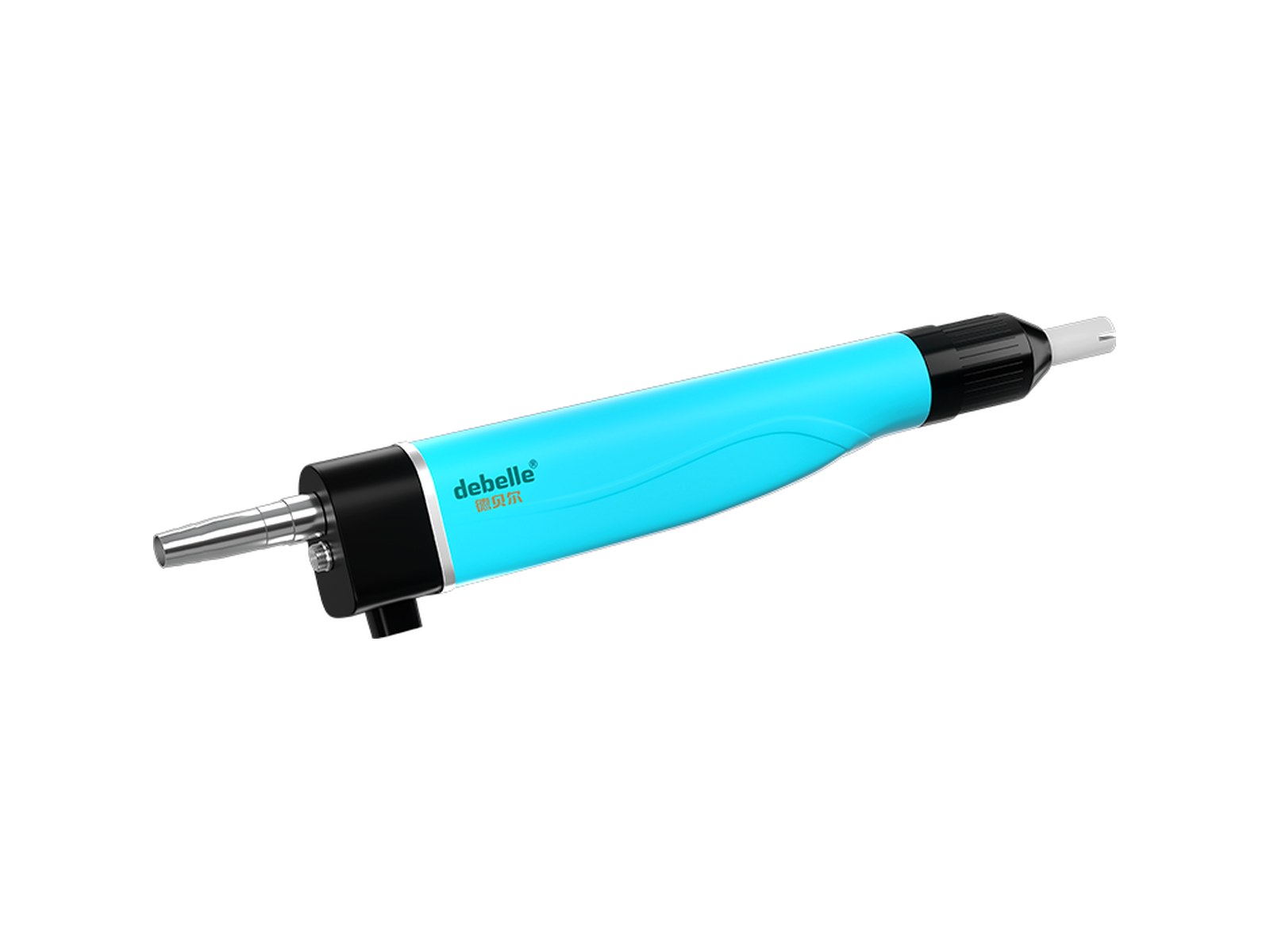
The high-end automatic gun of the V series and the gun head platform of the Kingkong F1 automatic version — usable standalone on automatic lines or combined with the F1 control cabinet.
Provide workpiece dimensions, material and daily output — we deliver selection advice and a configuration list.