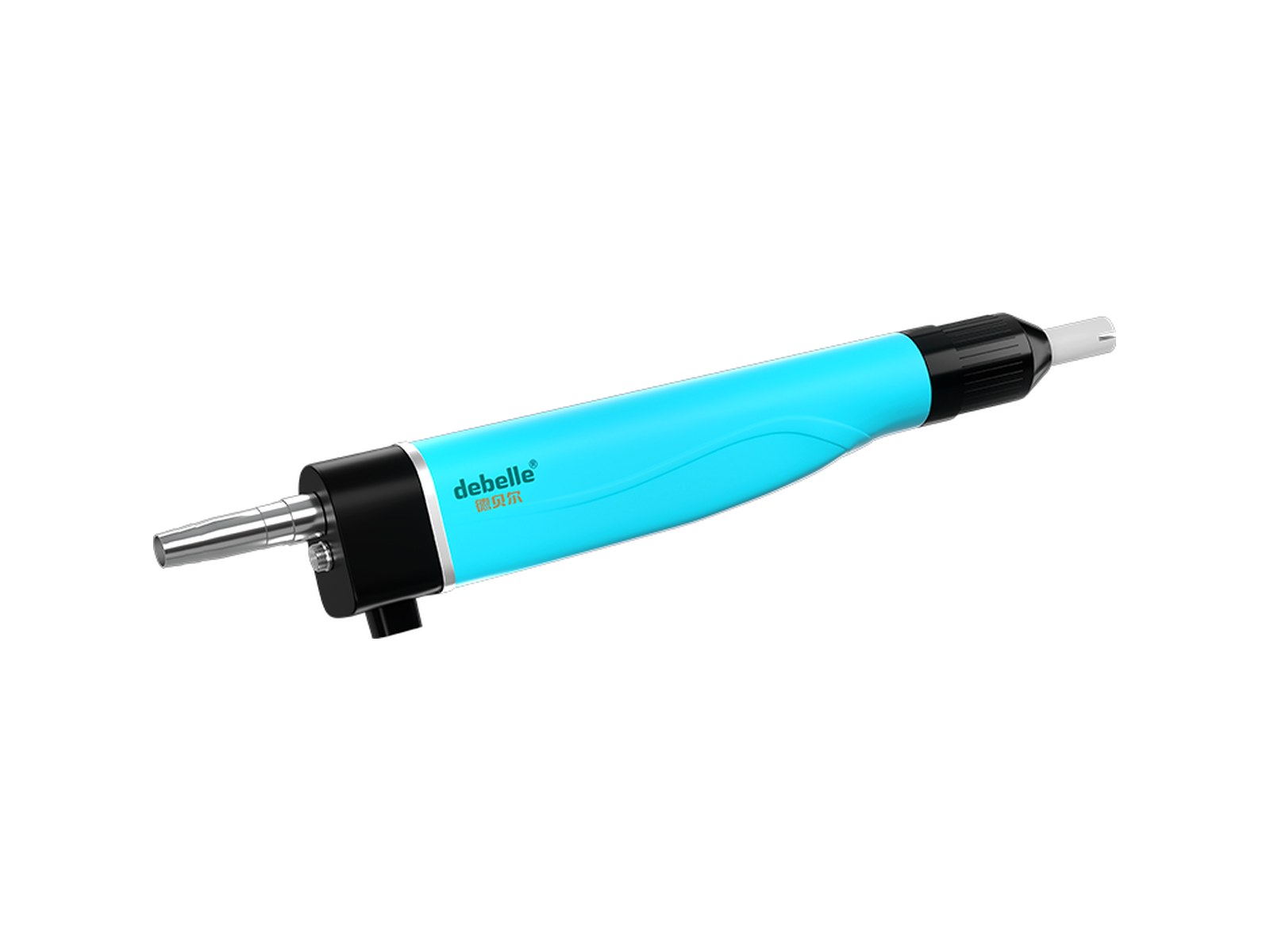
A spec sheet is only the entry ticket when you pick a powder coating gun factory. Three suppliers with the same headline numbers will look different after six months on your line: one misses steps during assembly, one never ran an electrostatic test before shipping, one cannot produce a wear-parts schedule, one only talks about response times instead of writing them down. The five checks below can all be done in a single factory visit, and they tell you more than ten brochures.
1. What to Look at in the Factory: Process Cards First
A control unit is not finished when the display lights up. The assembly process is broken into steps: power transformer, PCB boards, solenoid valve, pneumatic tubing, pressure regulator and gauge, sheet metal mask, housing, and finally testing. Testing is written in as the last production step, which means it is part of the build, not a favor done before packing.
Ask three questions on the shop floor and the answers separate the suppliers quickly:
- Where is today’s test record? (Not a sample record from last year.)
- Open one machine on the spot and look at the terminals, tube clamps and how the regulator is fixed.
- Does the control cabinet get a linked-function check before it leaves the workshop?
The third question is about the link between the main controller and the sub-controllers: after assembly the main controller has to be set, the unit restarted, and the sub-controllers checked for response. Skip that check and the problem will not show up at the factory. It shows up during the two days you spend commissioning the line.
2. What to Look at on the Test Bench: Three Test Items and a Trial Spray
An electrostatic test is not “measure the voltage once”. The test procedure specifies its conditions: 20 to 25 degrees Celsius, relative humidity 40 to 60 percent, and a test bench with a grounding resistance below 4 ohms. A record without those conditions cannot be compared between batches.
Ask how the test is run. The display is set step by step from 5 up to 100 while a high-voltage electrostatic meter reads the actual output at the gun head, then the values are checked against the calibration curve. The allowed deviation is about plus or minus 10 percent, it is affected by air humidity, and the figures measured on site are what count.
| Test item |
Reference range |
What to ask the factory for |
| Corona onset voltage |
30–50 μA |
Test record for this batch |
| Zero drift |
0–20 μA, no abnormal noise |
Per-unit records, not a sampling conclusion |
| Full-scale output |
60–100 kV |
Display value against gun-head measurement |
While you are there, check whether four things are on the bench: a high-voltage electrostatic meter, a properly grounded test platform, standard powder samples, and a timer. With all four, the out-of-factory test can actually be performed. Missing one, “we test every unit” deserves a second question.
More convincing than any record is a trial spray. Bring your own parts and the powder you intend to use, and let the factory coat them with its recommended settings. Watch the edges, the recesses and the film thickness. Most factories can arrange this, but if you do not ask, you usually only get to see the demo machine.
3. Service Response: Put the Time Windows in the Contract, in Tiers
“Available anytime” cannot be written into a contract, so break response time into tiers before you sign: emergency versus non-emergency, workday versus holiday, domestic versus overseas. For each tier, define the trigger and who pays.
There is a trap here. Different documents from the same supplier may state different time windows: “arrive within 24 hours on workdays” and “arrive within 48 hours on workdays” can both turn up for the same service. So do not memorize numbers, read the contract text. Ask the supplier to put the final wording into the contract; brochures and templates do not count.
Response usually escalates in three steps, and the cost of each step has to be clear before signing:
- Telephone and video guidance
- A damaged part identified, replacement sent by courier
- Guidance not enough, an engineer travels to the site
For export orders, ask one more question: is remote support free, and is an on-site visit billed separately? Common foreign-trade terms separate the two: remote installation guidance and training are free, while for an on-site engineer the buyer covers transport and labor is charged per man-day. Your quotation should carry the same line. Written down, it will not become an argument after delivery.
4. Service Scope: What the Quote Covers and What You Must Prepare
Installation and commissioning do not cover everything. The quotation terms list the scope in detail: installation is estimated at 1 to 2 days, and installation, commissioning, trial spray and training are all done by factory engineers — but the preconditions stay on your side.
| Item |
Who is responsible |
Note |
| Coating line, powder booth, pretreatment, compressor, power and accessories |
Buyer |
Installed before delivery |
| Connection of power, compressed air and drying system |
Buyer |
Outside the service scope |
| Piping layout and installation for inlet air pressure |
Buyer |
Outside the service scope |
| Grounding rod near the powder booth |
Buyer |
Driven to about 1.5 m as stated in the terms |
| Installation, commissioning, trial spray, training |
Seller’s engineers |
Usually 1 to 2 days |
| Consumables for commissioning, such as powder |
Buyer |
Prepare according to trial volume |
The value of this table is timing. Attach it to the contract and have both sides sign it. Settling “is this included?” on site costs far more than settling it on paper.
Training terms work the same way — write down the number of sessions and the content. A common foreign-trade clause reads: the seller provides free training once to the buyer’s staff, covering daily operation, use and maintenance of the gun. Whether one session is enough depends on how fast people move through your workshop. In a workshop with high turnover, negotiating refresher training is cheaper than losing production time.
5. Spare Parts and Lead Time: Ask for a Wear-Parts Schedule
A powder gun wears out at the consumables, not at the main unit. A supplier worth working with hands you a wear-parts schedule before you sign, instead of quoting part numbers only when something breaks.
| Wear part |
Suggested interval |
Note |
| Venturi tube |
3–6 months |
Adjust by coating volume |
| Inner powder tube |
1–3 months |
More frequent on automatic guns |
| Nozzle |
6–12 months |
Avoid impacts to extend it |
| Discharge needle |
3–6 months |
Depends on voltage setting |
| Sealing rings |
6 months |
Preventive replacement |
| Solenoid valve |
12–24 months |
An air filter extends it |
Then ask three more questions: are parts interchangeable across models in the same series (the usual answer for a family of guns is that they are basically interchangeable); are common parts held in stock or ordered on demand; and how is lead time quoted by quantity (generally within 7 days depending on quantity, with the contract confirming the final delivery date).
Keep one judgement for the shop floor: non-genuine parts cause powder spitting, uneven output, no output and poor deposition. Those symptoms are expensive to troubleshoot because they look like equipment failure when the real cause is a part that does not match the specification. So the spare parts list should carry original part numbers, not just dimensions. You can check wear parts and configuration per model on the product pages.
Self-check list
Most of what you need to judge a factory can be collected in half a day on site: process cards, test records, a trial spray, contract clauses and a spare parts list. Send us your part photos, material, daily output and current equipment, and we will work through the same logic to give you a configuration and selection recommendation — with a sample trial first when needed, so the decision rests on measured data. You can also start from the contact page.