

V12 Manual Electrostatic Powder Coating Gun
The all-round CNC machine, all in one step: 0-100kV with LCD display, 20 main programs + over 500 sub-programs storage, one-touch gun purge — covering all the capabilities of the E7 and 960.
View details →
Why does powder coating use less material than liquid paint? The answer is not in the paint tin, it is in the static charge. Liquid paint carries its resin to the part in a solvent, and the solvent then evaporates. Powder coating charges dry powder and lets an electric field press it onto a grounded part, which then goes into the oven to form the film. There is no solvent loss in between, and powder that misses the part can be recovered and reused.
The process splits into five steps. The first two decide whether the powder can carry a charge, and the rest decide whether it stays on the part.
| Step | What happens here | Symptom when it goes wrong |
|---|---|---|
| Powder feed | The pump moves powder from the hopper through the hose to the gun | Output surges or pulses |
| Charging | Powder picks up a static charge as it passes the electrode in the gun | Weak adhesion, powder will not hold |
| Atomising | Charged powder is atomised by air and sprayed at the part | Uneven pattern, banding |
| Electrostatic attraction | Charged powder follows the field onto the grounded part | Bare patches, bounce-back, poor adhesion |
| Curing | Heat melts, flows and cross-links the powder into a film | Low adhesion, loss of gloss |
One point is easy to get backwards: the air only carries the powder out of the gun. What presses it onto the part is the electric field. More air pressure will not help if the field is not established.
The material saving is not about spraying thinner. It comes from three things stacking up.
The coating contains no solvent. Liquid paint is only partly solids; the rest is solvent that evaporates as the film forms, so a share of what you spray never ends up on the part. Powder coating puts down film-forming material only, with no solvent to lose.
The field aims the powder at the part. Charged particles travel along field lines and land on the workpiece instead of drifting as air-sprayed droplets do. Field strength and how fully the powder charges directly decide how much of one pass reaches the part.
Overspray can be recovered. Powder that misses the part falls into the booth recovery system, is sieved, and can be blended back with virgin powder in a controlled ratio. That is how a powder line keeps its powder use per part down over time. The ratio has to be controlled — too much reclaim affects colour and flow, so the ratio follows the powder maker’s guidance and your own colour tolerance.
| Stage | Liquid paint | Electrostatic powder coating |
|---|---|---|
| Film former | Resin plus solvent | Solid powder, no solvent |
| After it reaches the part | Solvent evaporates, film dries | Part goes into the oven to melt and cure |
| Material that misses | Generally not reusable | Recovered, sieved, blended back in a set ratio |
| Thickness in one pass | Usually several coats | Thick-film work can build a large thickness in one pass |
| Shop emissions | Solvent vapour | No solvent vapour |
Attraction depends on four variables working together. Push any one of them out of range and the symptom is the same — poor deposition.
| Variable | What it does | Too much | Too little |
|---|---|---|---|
| Voltage | Sets the field force | Powder is repelled and bounces, grooves get harder to cover | Weak deposition, large bare areas |
| Current | Reflects stability of discharge and deposition | The reading jumps, local discharge becomes unstable | Unstable deposition, uneven film |
| Atomising air | Carries the powder out and spreads the pattern | Powder travels too fast, more bounce | Pattern stays tight, coverage is narrow |
| Gun distance | Sets where the powder enters the field | Too far, powder disperses before it arrives | Too close, orange peel and worse coverage in corners |
Voltage and current are not a case of higher being better. Machines usually adjust continuously across a 0–100 kV and 0–100 µA range, but the working values depend on the part and the powder. A common approach is a higher voltage band for flat parts, a middle band for grooved parts and metallic powder, and a low band for recoat work so a second coat does not build up and orange-peel. When in doubt, spray a sample first and set the recipe from measured thickness and appearance. Models with part memory let you store and recall those recipes — see the product page.
The part side has to conduct as well: the workpiece must be reliably grounded, with the rod depth, routing and joints all sound, or no amount of gun adjustment will give you a field to work with.
Poor deposition on site is rarely one single cause. Work through these in order, starting with the item that costs nothing but labour.
| Symptom | Likely cause | How to confirm |
|---|---|---|
| Bare patches in a regular pattern that follow the hanging points | Powder build-up on the hanger hook insulating it | Take the hook off, look at the build-up, clean back to bare metal |
| The current reading jumps and will not settle | Earth rod too shallow, cable running parallel to power lines, loose joints | Check the depth, check it is routed separately, check the joints are tight |
| Grooves and deep channels will not coat | The Faraday effect shields the field inside the cavity | Lower voltage, adjust atomising air, shorten gun distance, touch up by hand |
| Powder output surges and deposition is unstable | Air supply pressure fluctuating, below 0.6 MPa | Watch the gauge while spraying for a dip or oscillation |
One combination is easy to overlook: poor grounding on the part, the nozzle too close, parts hung so densely that they touch, a thick insulating layer on the hanger, or aluminium burrs on the workpiece. Any one of them stops the charge from building, and the result looks like bare patches or low deposition. These cost labour, not equipment, so clear them before you start adjusting the gun.
Attraction only holds the powder on the surface. Forming the film is the job of the curing oven. General-purpose powder coatings cure in roughly the 150–200 °C, 15–20 minute band; the powder maker’s technical data sheet is the final word. Too little temperature or time leaves a film that looks formed but fails on adhesion and weathering; overheating can dull or discolour it.
The booth environment affects attraction too. Keep the shop at roughly 5–30 °C and hold measured relative humidity under 65 percent. High humidity makes powder clump and flow badly, which shows up in both attraction and atomisation.
Send us the part material, the powder types you run and your current settings, and we will work through which link in the chain is failing. If you have sample parts, spray them first and set the parameters from measured results. For project planning you can contact us.
Models commonly used in this situation — tell us your workpiece and we confirm the fit:
The all-round CNC machine, all in one step: 0-100kV with LCD display, 20 main programs + over 500 sub-programs storage, one-touch gun purge — covering all the capabilities of the E7 and 960.

CNC automatic flagship with one-touch gun purge, multi-gun interlock control, and cross-backup control units that keep production running — the core solution for large powder booth automatic lines.

DEBELLE's classic entry-level manual electrostatic powder coating gun with adjustable 0-85kV output and automatic voltage tracking by gun distance. A cost-effective choice for flat panels and small-to-medium batches.
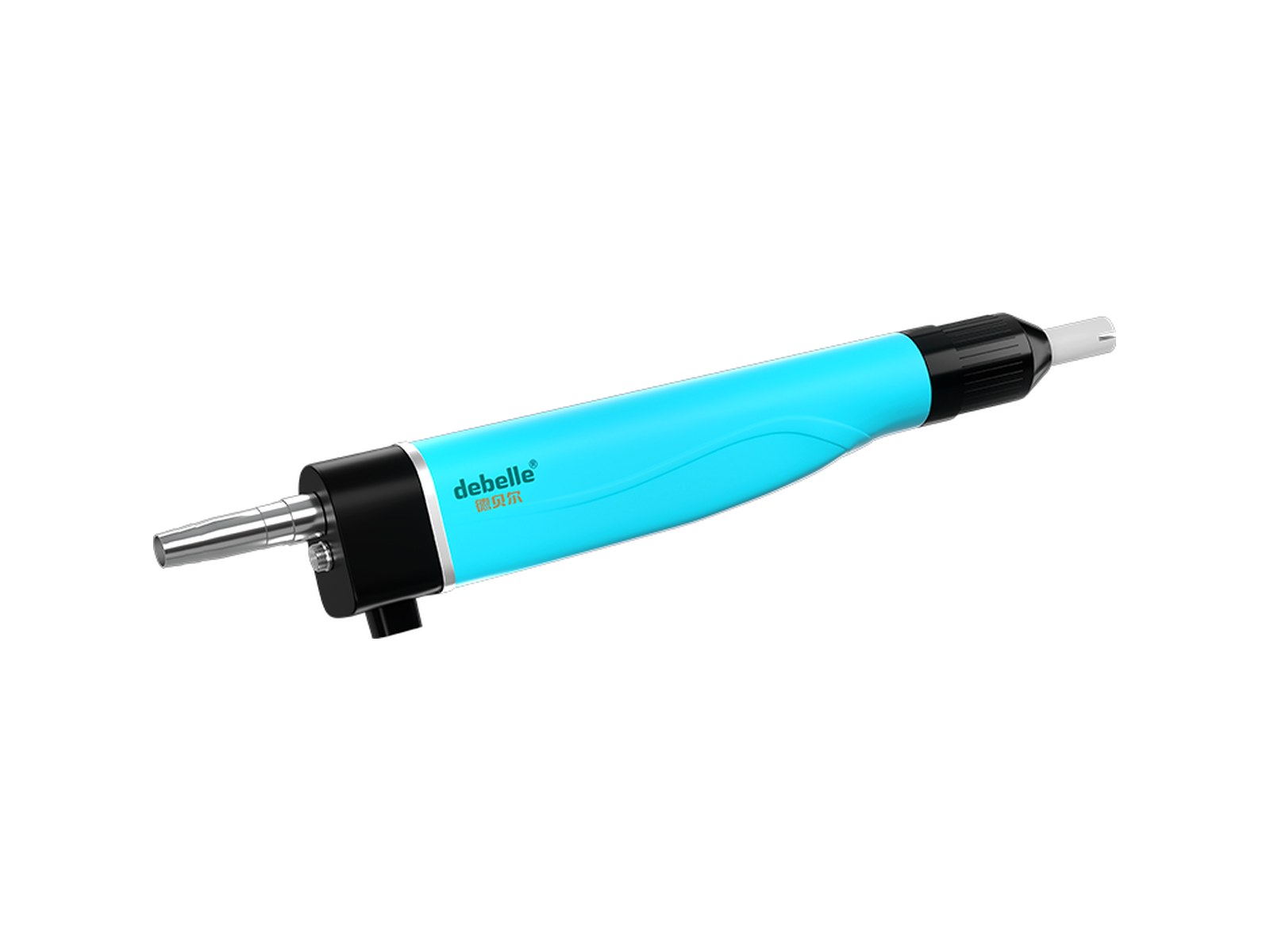
The high-end automatic gun of the V series and the gun head platform of the Kingkong F1 automatic version — usable standalone on automatic lines or combined with the F1 control cabinet.
Provide workpiece dimensions, material and daily output — we deliver selection advice and a configuration list.