

V12 Manual Electrostatic Powder Coating Gun
The all-round CNC machine, all in one step: 0-100kV with LCD display, 20 main programs + over 500 sub-programs storage, one-touch gun purge — covering all the capabilities of the E7 and 960.
View details →
On a line that changes colour often, the output is lost in the minutes spent changing over. But a slow colour change is rarely the operator’s fault: it is a chain of fixed actions, and if one link is not designed properly the whole line waits. This article splits colour change into five steps and gives the actions and thresholds for each. What your own changeover time can realistically be depends on how many guns you run, how long the hoses are and whether you have an automatic cleaning program - so measure your baseline first, then cut it step by step.
Do not guess that “our colour change takes forty minutes”. Next time, hand the operator a sheet and have them time each of the five steps. You will see exactly where the time goes.
| Step | What it includes | Why it usually drags |
|---|---|---|
| 1 Powder source | Empty old powder, clean the fluid hopper, load new powder | Hand scooping, hopper wall scraped by hand |
| 2 Hose and gun cleaning | Powder pump, hose, gun body | Gun cleaned but hose not, old powder comes out next cycle |
| 3 Recovery and booth | Recovery system, filters, booth walls | Recovery stopped too early, reclaimed powder mixes colours |
| 4 Parameter reset | Powder output, atomization, voltage, current | Trial spraying to find the feel again |
| 5 First-part check | Trial part, film thickness and colour | Steps 1-4 not clean, first part reworked repeatedly |
Steps 1-3 are machine actions and are cut with equipment configuration. Steps 4 and 5 are human actions and are cut with standardisation.
The traditional routine is scoop out the old powder, wipe the hopper, pour in new powder. It is manual, dusty, and the hopper wall never comes fully clean. A powder centre is designed specifically for fast colour change: the powder box supplied by the powder manufacturer is placed in the position of the fluid hopper, and when the run is finished the box goes back to the warehouse. During a colour change you only move the box - no scooping and no hopper washing.
A typical powder centre includes an integrated automatic fluidising and recovery unit, integrated electrical control and a powder level sensor. The level sensor controls the rise and fall of the powder transfer unit, while the suction tube, powder pump, hose and the inside of the gun can all be cleaned automatically, and reclaimed powder goes straight back into the powder box. What matters for colour change is three things: the powder source is swapped in one move, cleaning is done by the program, and reclaimed powder returns to its own colour box instead of bleeding into the next colour.
If a powder centre is not in the plan yet, standardise the scooping instead: keep two colour boxes, sieve reclaimed powder and blend it at an agreed ratio, and blow the hopper wall with oil-free compressed air rather than wiping it.
The powder path itself is best handled by the machine. On the V12 automatic powder gun, the one-touch cleaning program automatically cleans residual powder out of the powder pump, the hose and the electrode needle, then returns to the main program; the cycle runs at roughly nine pulses per minute. That covers the inside of the powder path.
What the program cannot reach has to be done by hand: the outside of the nozzle, the gun holder, the booth walls and the conveyor hooks. The accepted shutdown sequence is clear - run the one-touch cleaning first, then switch off the guns and the interface, and finally cut the main power and air. For a long shutdown, the nozzle, gun barrel, hose and powder pump have to be taken apart and cleaned separately.
There is only one honest way to judge whether cleaning worked: the first parts after the change. Scattered foreign-colour specks on the surface mean old powder is still coming through - stop and clean again rather than spraying on.
Three causes of powder escaping the booth come up again and again: poor booth sealing, a weak recovery system, and poor transfer or excessive powder output at the gun. The one most often forgotten during a colour change is the recovery system - stop it too early and old powder sitting in the filters and ducting drops back onto the parts in the next cycle, showing up as the previous colour inside the new one.
Trial spraying after every colour change to find the feel again is the biggest hidden time cost on many lines. The V12 manual model supports part memory with 20 main programs and more than 500 sub-programs: set up flat parts, recessed parts and recoated parts once each, save them, and recall the program at the next change. It saves time and stops each shift from building its own settings.
Use this table as the starting point after a colour change, then fine-tune for the part:
| Parameter | Adjustable range | Direction | Common range |
|---|---|---|---|
| Powder output | 0-100 | Higher number, more powder | 15-100 |
| Atomization | 0-100 | Lower is sharper and denser; higher is softer and wider | 10-50 |
| Voltage | 0-100 kV | Too high causes orange peel, too low reduces transfer | 30-100 kV |
| Current | 0-100 μA | Too high causes orange peel, too low reduces transfer | 15-80 μA |
Two more items are directly tied to changeover: keep the gun 200-300 mm from the part, since too close causes orange peel and too far means powder never reaches the surface; and leave slack in the hose routing with gentle bends, because a pinched hose affects powder delivery.
With the first four steps done properly, the first-part check comes down to three actions: look at colour difference, look at film thickness, look for foreign-colour specks. If steps 1-4 were done properly the first part usually passes; if it keeps failing, the problem is cleaning, not spraying. For lines running many colours in small batches, this step is worth turning into a fixed form - see our furniture hardware coating solutions.
| Symptom | Likely cause | How to confirm |
|---|---|---|
| Foreign-colour specks on the first parts | Residue in hose or gun body | Remove the hose and inspect the inner wall; run cleaning again and respray |
| Previous colour showing through, dull shade | Recovery not fully cleaned, or reclaimed powder not separated | Check filters and recovery ducting; confirm separate boxes per colour |
| Film thickness low after changeover | Old colour’s parameters carried over | Compare powder output and atomization against the stored program |
| Powder clouding out of the booth | Poor booth sealing or weak recovery airflow | Check booth doors and seals; check suction at the recovery inlet |
| Hose changeover slow, joints leaking | Not enough slack, wrong hose size | Select hose size by model; use connectors at the joints |
| Hose splits soon after a change | Inner hose worn, faster on continuous lines | Open it up and look for thinning or longitudinal cracks |
Cutting changeover time is really about moving actions off the operator’s hands and into the machine’s programs. Send us part photos, material, how often you change colour and your current changeover records - we will work through this logic with you and identify which step is worth fixing first. If needed we can ship samples for a trial spray and let the measured results decide the configuration.
Models commonly used in this situation — tell us your workpiece and we confirm the fit:
The all-round CNC machine, all in one step: 0-100kV with LCD display, 20 main programs + over 500 sub-programs storage, one-touch gun purge — covering all the capabilities of the E7 and 960.

CNC automatic flagship with one-touch gun purge, multi-gun interlock control, and cross-backup control units that keep production running — the core solution for large powder booth automatic lines.

DEBELLE's classic entry-level manual electrostatic powder coating gun with adjustable 0-85kV output and automatic voltage tracking by gun distance. A cost-effective choice for flat panels and small-to-medium batches.
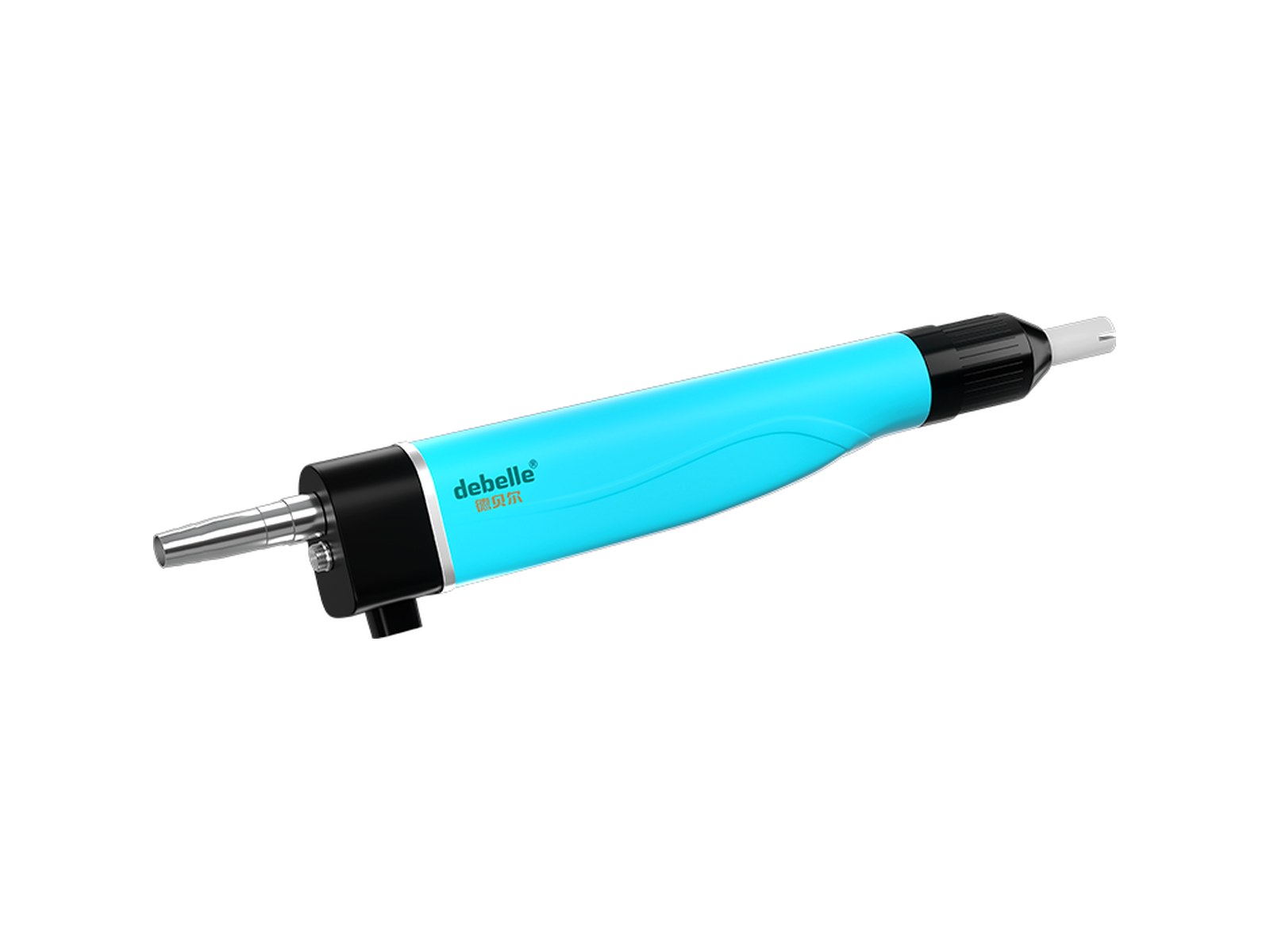
The high-end automatic gun of the V series and the gun head platform of the Kingkong F1 automatic version — usable standalone on automatic lines or combined with the F1 control cabinet.
Provide workpiece dimensions, material and daily output — we deliver selection advice and a configuration list.